

Can Lungpacer® wean your patient off the vent?
What you need to know about the new FDA-approved diaphragm-buzzer

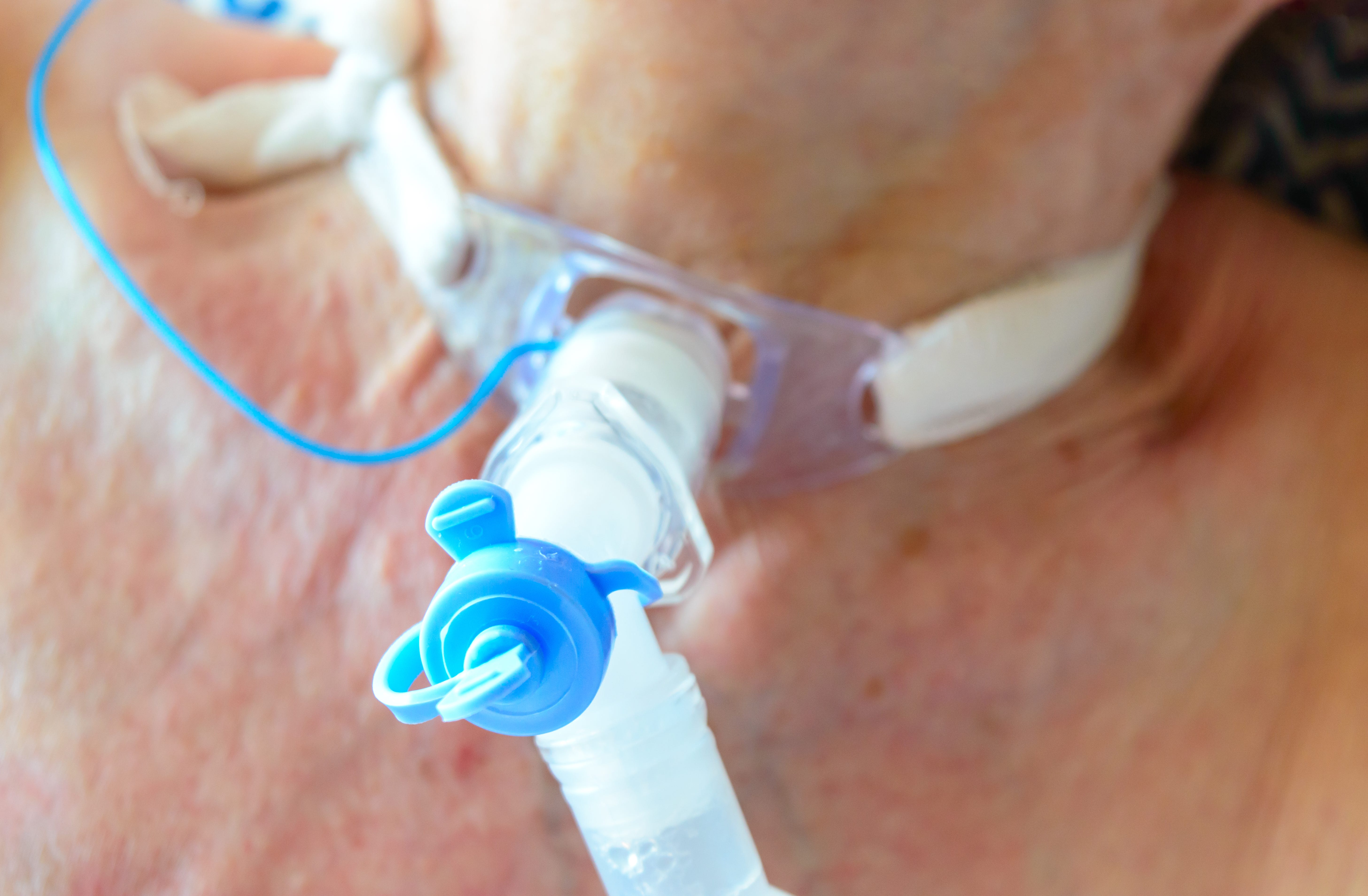
About 2.5 million people each year go on a mechanical ventilator, and some do not easily come off. Estimates vary, but in the U.S., tens of thousands of people annually require ventilation for ≥14 days, and hundreds of thousands remain persistently ventilator dependent at any given time.
Atrophy of the diaphragm muscle occurs soon after mechanical ventilation is initiated, and diaphragmatic weakness is a major culprit for prolonged ventilator dependence. Such patients have a high rate of disability and death in the months after their acute illness.
Surgical implantation of diaphragm pacemakers has a niche role in patients with spinal cord injury, but is too invasive and unproven for use in the generalized vent-dependent population.
Enter the Lungpacer®
After development and testing for over a decade, a transvenous diaphragmatic electrical pacing system has recently become available for sale and use in the U.S. by Lungpacer®.
Lungpacer’s device is a specialized 8.5 French triple-lumen central venous catheter with electrodes embedded along its length. The catheter is inserted via the left internal jugular or subclavian vein, and has a plug along with the three lumen ports. The plug is attached to a bedside console, which can deliver rhythmic electrical impulses down the catheter. These impulses stimulate the phrenic nerve (adjacent to the vena cava), which contracts the diaphragm, giving it an artificially induced workout (e.g., 60 repetitions twice daily). The product is being sold under the brand name AeroPace®.
Does pacing help people get off the vent?
The Lungpacer device stimulates the diaphragm and increases the forcefulness of breathing efforts (maximal inspiratory pressure), no doubt.
In randomized trials, numerically more patients receiving transvenous stimulation have been able to successfully wean from mechanical ventilation, but without reaching statistical significance by conventional standards.
The limited available data were nevertheless sufficient to convince the FDA to approve the Lungpacer system for sale and use in the U.S.
The evidence for the diaphragmatic pacing system comes primarily from one randomized trial and a similar, smaller one (both funded by Lungpacer):
RESCUE-3
Between 2019 and 2023, at ~48 centers in the U.S. and Europe, authors enrolled ~200 patients who had been vented for at least 4 days and had failed at least two weaning attempts.
Most had been vented for almost a month, and 64% already had a tracheostomy.
They were randomized to receive transvenous diaphragm neurostimulation twice daily or usual care.
The trial was stopped early by the sponsor (Lungpacer) due to financial considerations and slow enrollment.
In the patient data available at early termination, 70% of paced patients were successfully weaned, vs. 61% of non-paced patients, at 30 days of follow-up.
This did not clearly meet traditional standards for statistical significance. However, a bayesian design was employed, which provides flexibility for investigators to produce favorable results. To boost their power, investigators went back and “borrowed” data from some patients enrolled in RESCUE-2 (a prior iteration with a similar trial protocol, enrollment criteria, etc).
After injecting data from the patients borrowed from RESCUE-2, they were able to produce a 98% posterior probability of superiority for diaphragmatic pacing (it was ~91% without this “rescue” by the older data).
RESCUE-2
In a design similar to RESCUE-3 but smaller (43 patients receiving pacing vs. 55 controls) and with shorter durations of respiratory failure, 82% of paced patients were successfully weaned vs 74% of controls, which was not statistically significant. Maximal inspiratory pressure was significantly increased in the treatment group (+17 cm H2O vs +5 cm H2O).
Lungpacer Device Risks and Adverse Events
In RESCUE-2, there were no observed differences in adverse events; the groups were small (~100 patients total). Adjudicators were blinded to treatment group when they assessed for adverse events.
In RESCUE-3, serious adverse events were reported in 36% of treated patients vs 24% of controls; these included more cardiac events (11% vs 2%) and infections (17% vs. 11%). Adjudicators were not blinded to treatment assignment, which could increase the chance for bias (in either direction).
NaCl (Need Another Central Line)
The company’s website copy states, “Most people on mechanical ventilation already have a central venous catheter (CVC) inserted into a vein in the upper left chest or neck area….In many cases, the AeroPace Neurostimulation Catheter may replace an existing CVC.”
This may be true early in the disease course. However, most patients with prolonged respiratory failure have had their central lines removed by day 14 of their ICU stay.
Thus, using the AeroPace would often require a new or prolonged central line solely to deliver diaphragmatic stimulation.
How prolonged? RESCUE-3 specified for the device to be used for up to 30 days or until vent liberation is achieved. That’s a long time for an otherwise unneeded central line to stay in.
Transvenous diaphragm pacing is FDA-approved
Based on the results of RESCUE-3, the U.S. FDA granted premarket approval to Lungpacer’s AeroPace device for assisted ventilator weaning in patients requiring more than 96 hours (≥4 days) of mechanical ventilation.
Although the device might not yet have been clearly shown to be safe and effective by most clinicians’ standards, Lungpacer was graded on a curve, so to speak, through the FDA’s “breakthrough devices” track.
The problem of prolonged respiratory failure was considered to be sufficiently large, with a total lack of effective therapies. This justified a liberal approach to approval for an innovative medical device (even one considered Class III, or high-risk) to address the unmet need, according to the general policy reasoning regarding PMAs for such de novo devices.
But what about inspiratory muscle training?
In inspiratory muscle training, the patient voluntarily breathes in through resistance, such as through a PowerBreathe device. It’s basically physical therapy for the diaphragm. (PulmCCM has no affiliation, financial or otherwise, with any device or drug marketer.)
There is evidence that for patients with prolonged respiratory failure and tracheostomies (roughly the population in RESCUE-3), inspiratory muscle training improves respiratory strength and might improve weaning success.
In a more recent study (albeit in a lower-income country setting and with an implausible mortality benefit), see Guimarae et al, Crit Care Med 2021.
The RESCUE-2 authors mention IMT’s potential benefits, saying “limited clinical data have suggested the usefulness of inspiratory muscle training to facilitate weaning from prolonged mechanical ventilation.”
And, they pointed out, AeroPace only achieved roughly what would be expected with the noninvasive, low-tech method: “The improvement in maximal inspiratory pressure in the treatment group at Day 8 was similar to that reported with inspiratory muscle training.”
They also acknowledged that pacing only stimulates the diaphragm, while inspiratory muscle training could theoretically strengthen more of the muscles of respiration.
Yet despite these potential benefits of inspiratory muscle training, it has never been meaningfully tested in a large randomized trial in the U.S. or Europe.
As of the above 2018 review, virtually all trials were single-center and with fewer than 100 subjects, and a new literature search did not reveal any significant trials.
Even more interesting: inspiratory muscle training was prohibited in RESCUE-3, the trial that convinced the FDA.
In other words, FDA did not require a head-to-head comparison between Lungpacer and the most promising potential alternative therapy, which is noninvasive and virtually risk-free. And the sponsor went so far as to prohibit any such comparison from occurring in its trial leading to device approval.
Many patients with prolonged respiratory failure are not able to participate in inspiratory muscle training. For them, invasive therapy might be the only adjunctive option over usual care.
But many others can participate.
Where the money is
When it comes to the adoption of medical devices in the U.S., history has shown that the most important question is not “Does it work?” but “Will someone pay for it (and how much)?”
After receiving FDA approval, Lungpacer achieved an enormous coup by securing “New Technology Add-On Payment” status for the AeroPace system from the Centers for Medicare and Medicaid, which heavily influences coverage and payment rates for all insurers in the U.S.
Under that NTAP designation, hospitals will be eligible to receive up to $23,650.90 in additional Medicare reimbursement per case using the AeroPace System, according to a company press release.
Applying this to the tens of thousands of patients requiring prolonged mechanical ventilation in the U.S. each year would imply a hypothetical market in the single-digit billions of dollars.
But the bigger money could come from earlier device placement into the much larger population of mechanically ventilated patients who haven’t yet failed weaning.
In the STIMULUS trial, Lungpacer explored what could be construed as a potential entry point to this larger (and currently off-label) market. AeroPace devices were inserted into 19 patients shortly after intubation, and diaphragm stimulation occurred frequently throughout their duration of ventilation. STIMULUS was not a weaning trial, but the investigators reported improved cardiac output and mean arterial pressure after diaphragmatic stimulation—opening a future path to expand FDA indications and market the device to cardiac surgeons, for example.
Will FDA ever require Lungpacer to prove a clinically meaningful benefit?
Now that Lungpacer has FDA approval, it would not be advantageous for the company to voluntarily conduct larger trials that might undermine its claims to efficacy.
There are no large trials with Lungpacer devices listed on clinicaltrials.gov.
From a query of its database, the FDA seems to be requiring only a postmarketing follow-up cohort of 100 subjects treated with AeroPace, in whom “safety and effectiveness outcomes will be compared to data from historical RESCUE 3 Control group subjects.” Since this would be a non-randomized cohort with no true control arm, it won’t be expected to provide meaningful data on the device’s effectiveness.
Would you place (or want) a Lungpacer?
The decision whether to place a Lungpacer device will be complicated, especially for patients with persistent respiratory failure who do not otherwise require a central line.
Although the limited data available suggest it has potential benefits, the AeroPace still feels like an unproven, investigational therapy, with inherent procedure-related and infection risks (its FDA approval notwithstanding).
On the other hand, prolonged respiratory failure has a very high rate of permanent disability, ventilator dependence, decimation of quality of life, and mortality. Taking on some risk to avoid these outcomes might be reasonable for many patients.
This will therefore be an individualized decision for each patient, their family, and their physician.
At a minimum, one hopes that the approval of the Lungpacer device on a low evidence base, combined with the new large payments incentivizing its placement, will together focus the attention of clinical researchers and practicing physicians on defining any potential benefits of inspiratory muscle training.
The evidence is insufficient for inspiratory muscle training to be recommended as a standard therapy today. But when the alternative is an invasive line for up to 30 days, it suddenly looks like a must-try.
A Lungpacer device costs $24,000 and has undeniable risks; a handheld inspiratory trainer costs $75 and has none. If the federal government is genuinely interested in saving money, this is one research area with potentially massive ROI.
Wow. Thanks. It’s a ridiculous cost for marginal gain. The critical-care bubble grows bigger. Lobbyists and a loose fda behind this one likely. And to think it’s hard for insurance to allow for single maintenance and inhaler therapy because it can’t get around the early refill to renew your drug. Or rather that some forgo inhalers due to cost. Like that kid in Wisconsin whose Advair bumped up arbitrarily to $500/month and he died a couple days later after not refilling. But hey..if they caught him early just enough to get to get on the vent he would have got a $23000 boost to the hospital for using Lungspacer!