

Etomidate vs. ketamine for intubation induction (RSI Trial)
New answers to longstanding questions about the common induction agents

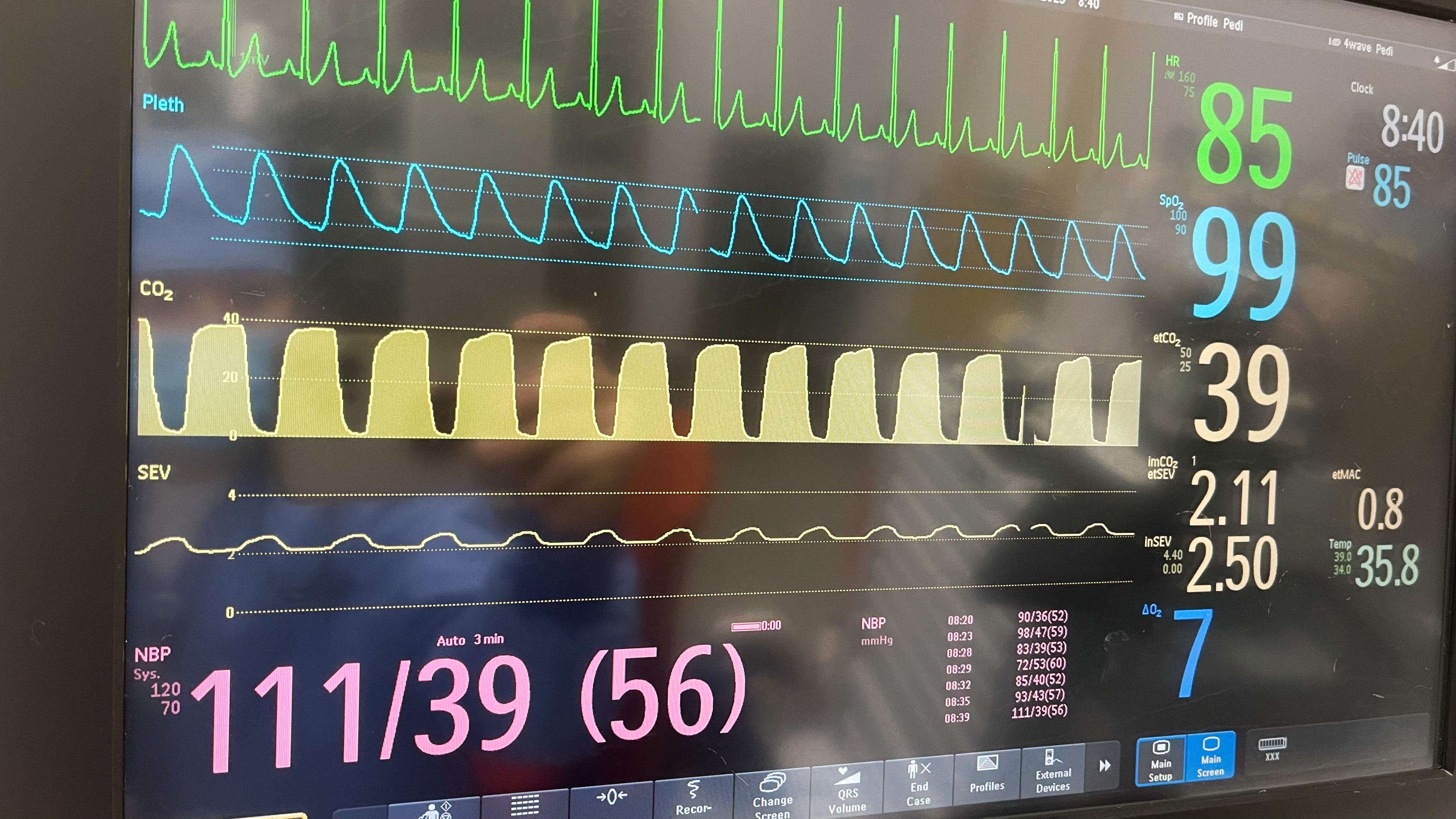
Etomidate and ketamine are the most commonly used agents to induce anesthesia before endotracheal intubation. Although etomidate is superior at quickly rendering patients unconscious, it suppresses adrenal function and has been suspected of causing more hypotension after intubation, relative to ketamine.
Pooled results from randomized trials have even suggested that etomidate causes excess mortality, with a number needed to harm of 31 (i.e., for every 31 patients induced with etomidate rather than another agent, one of them would die unnecessarily).
Australian health authorities effectively banned the use of etomidate based on such concerns, and other countries have also restricted or blocked the use of etomidate for RSI.

A new randomized trial has suddenly put all those suspicions into a new light.
The RSI Trial
At 6 emergency departments and 8 ICUs at 6 U.S. medical centers between 2022 and 2025, 2,365 patients undergoing intubation were randomized 1:1 to induction with either etomidate or ketamine. Virtually all received a neuromuscular blocking agent.
This was a pragmatic design in which:
Clinicians could select a preset low, medium, or high dose of either agent.
In practice, ketamine was provided at a median dose of 1.6 mg/kg (~112 mg in a 70 kg patient)—less than the “full dose” of ketamine (2 mg/kg, or 140 mg in a 70 kg patient). More than a quarter of patients got the full dose.
Etomidate was given at a median of 0.28 mg/kg (~20 mg in a 70 kg person). This was essentially the “full dose” of etomidate (0.30 mg/kg).
So patients received lower doses of ketamine than etomidate on average, relative to the reference “full dose” of each.
Vasopressors could be initiated and dosed prophylactically at the clinician's discretion.
Clinicians increased vasopressors at induction in 18-20% of patients, about 2% more often in the etomidate group (nonsignificant), either by chance or out of a perception that etomidate was more likely to drop BP.
The Results
After 28 days, 28% of ketamine-induced patients and 29% of etomidate-induced patients had died in the hospital (nonsignificant).
When including patients whose death occurred in or out of the hospital by 28 days (a prespecified sensitivity analytic criterion), even that small difference disappeared entirely (32.2% vs 32.4% mortality).
Cardiovascular Collapse With Ketamine
However, ketamine-induced patients had significantly more cardiovascular collapse (systolic blood pressure below 65 mmHg, new or increased dose of vasopressors, or cardiac arrest)—22% vs 17%.
Ketamine was more likely to precipitously reduce blood pressure even when it did not produce frank hypotension: 24% of ketamine-induced patients had a decrease in systolic blood pressure >30 mmHg after induction, vs. 15% of those in the etomidate arm—a 9% absolute difference.
Effects More Pronounced in Septic Patients
Cardiovascular collapse in the ketamine arm was even more pronounced in patients with a diagnosis of sepsis (30.6% of ketamine patients vs 20.9% in the etomidate group), an almost 10% absolute difference. This was a prespecified outcome.
But Did Etomidate Patients Get An “Unfair” Vasopressor Boost?
The increase in cardiovascular collapse with ketamine should be considered against the 2% increase in use of vasopressors in the etomidate arm (by clinician bias/preference or chance). Without that thumb on the scale, this finding would likely not be statistically significant overall (but still would be for septic patients).
Shocking? Counterintuitive? Not Really
Ketamine never earned its reputation as being less prone to produce hypotension than etomidate. There were observational studies [1, 2] and a randomized trial suggesting that ketamine was more, not less likely to cause cardiovascular collapse. The sepsis-specific excess in hypotension with ketamine was also previously observed. Overall the signals were mixed, the study sizes small, and the definitions heterogeneous, all as per usual.
As the authors rightly point out, the sample size in the RSI trial (n=2,365) is almost as many patients as were enrolled in all seven previous RCTs combined into the extant meta-analyses [3, 4]. One of those two meta-analyses (Greer et al CCM 2025) concluded that ketamine “probably results in more hemodynamic instability during the peri-intubation period.”
“Catecholamine Depletion” Hypothesized As Mechanism
Although ketamine is widely considered a sympathomimetic that increases plasma catecholamines and preserves blood pressure in healthier patients and volunteers, critically ill patients are theorized to be relatively less able to produce catecholamines in response to ketamine (so-called catecholamine depletion).
According to this theory, ketamine’s negative inotropic and vasodilatory effects (which are normally blunted by the catecholamine release) are then unopposed in critically ill patients, in whom blood pressure can fall precipitously.
None of this has ever been scientifically tested (e.g., by somehow showing that patients who crash after ketamine have depleted catecholamines).
Conclusions
When considering deaths that occurred in or out of the hospital at 28 days, patients whose intubations were facilitated by etomidate or ketamine had virtually identical mortality (32%).
However, ketamine-induced patients had about a 5% absolute higher rate of hypotension and cardiovascular collapse—a number needed to treat of about 20 to avoid one episode of cardiovascular collapse.
These effects appeared more pronounced in the large proportion of patients with a diagnosis of sepsis. Ketamine’s apparent hypotensive effect may have been somewhat exaggerated by the subtle tendency of clinicians (~2%) to use more prophylactic vasopressors in patients being intubated with etomidate.
Both agents continue to be appropriate for RSI. Among clinicians opting for ketamine, more will likely also opt to provide prophylactic low-dose norepinephrine or at least have it ready for immediate infusion.
References
Casey JD, Seitz KP, Driver BE, et al. Ketamine or Etomidate for Tracheal Intubation of Critically Ill Adults. New England Journal of Medicine. Published online December 9, 2025. doi:https://doi.org/10.1056/nejmoa2511420
Mohr NM, Pape SG, Runde D, Kaji AH, Walls RM, Brown CA. Etomidate use is associated with less hypotension than ketamine for emergency department sepsis intubations: A NEAR cohort study. Academic Emergency Medicine. 2020;27(11). doi:https://doi.org/10.1111/acem.14070
Fouche PF, Meadley B, St Clair T, et al. The association of ketamine induction with blood pressure changes in paramedic rapid sequence intubation of out‐of‐hospital traumatic brain injury. Reardon RF, ed. Academic Emergency Medicine. 2021;28(10):1134-1141. doi:https://doi.org/10.1111/acem.14256
Kotani Y, Piersanti G, Giacomo Maiucci, et al. Etomidate as an induction agent for endotracheal intubation in critically ill patients: A meta-analysis of randomized trials. Journal of Critical Care. 2023;77:154317-154317. doi:https://doi.org/10.1016/j.jcrc.2023.154317
Matchett G, Gasanova I, Riccio CA, et al. Etomidate versus ketamine for emergency endotracheal intubation: a randomized clinical trial. Intensive Care Medicine. 2022;48(1):78-91. doi:https://doi.org/10.1007/s00134-021-06577-x
Greer A, Hewitt M, Khazaneh PT, et al. Ketamine Versus Etomidate for Rapid Sequence Intubation: A Systematic Review and Meta-Analysis of Randomized Trials. Critical care medicine. Published online Spring 2024:10.1097/CCM.0000000000006515. doi:https://doi.org/10.1097/CCM.0000000000006515
Acquisto NM, Mosier J, Bittner EA, et al. Society of Critical Care Medicine Clinical Practice Guidelines for Rapid Sequence Intubation in the Critically Ill Adult Patient. Critical Care Medicine. 2023;51(10):1411-1430. doi:https://doi.org/10.1097/ccm.0000000000006000
WHITE JM, RYAN CF. Pharmacological properties of ketamine. Drug and Alcohol Review. 1996;15(2):145-155. doi:https://doi.org/10.1080/09595239600185801
This reminds me of a paper that looked lvot vti predict propofol induced hypertension (<15)
I remember when I was taught RSI, I was always instructed to have a leader of LR running.
In this day and age of pocus, it seems to me that we should be able to not only evaluate cardiac and fluid status but also resuscitate/optimize hemodynamics accounting for potential hypertension, either from ketamine, propofol, analgesic, etc.
Great analysis. I typically reach for ketamine when I don’t want my patient to stop breathing when intubating for hypoxic respiratory failure. Do you know if any randomized trial looked at that?