

Hope for Post-ICU Syndrome? (iRehab Trial)
Post-discharge interventions brought benefits -- to the strong

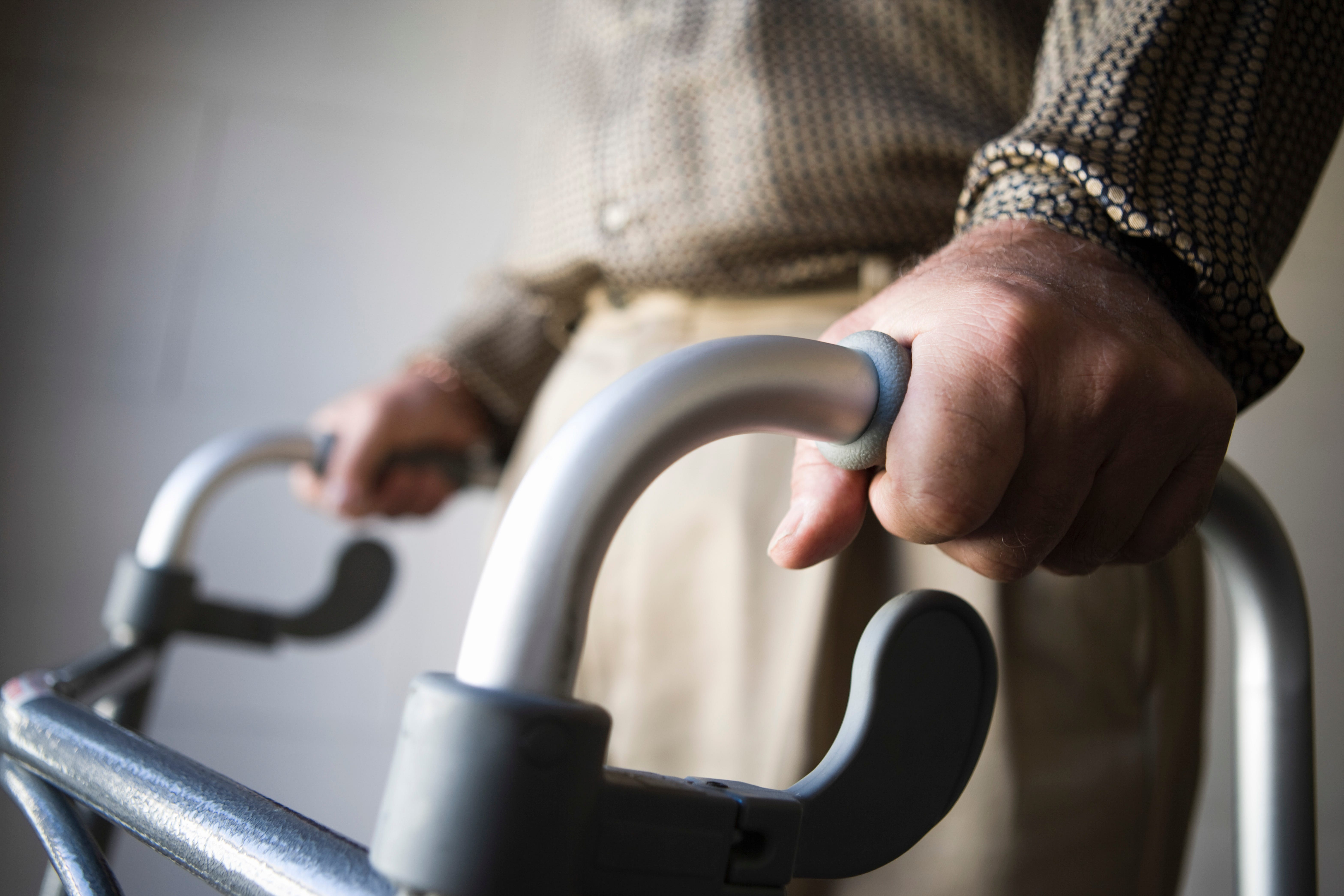
Attending to the complex needs of patients after their ICU stays—physical, social, and psychological—seems intuitively certain to improve their long-term recovery.
Clinical evidence has not clearly shown that to be the case, but the overall quality of research in this underfunded area has been limited.
At first glance, the latest data from a rare multicenter randomized trial may seem uninspiring, but a closer look provides some encouragement that focused post-ICU interventions might yield benefits to some patients.
The iRehab Trial
At 52 hospitals in the U.K.’s National Health System, 429 ICU survivors of critical illness with ≥48 hours of mechanical ventilation were recruited within 12 weeks of their hospital discharge.
They were randomized to receive either usual care, or a lot of support for six weeks. This included a remotely administered individualized rehabilitation plan that focused on symptom management, exercise targeted at their weak areas, psychological support, and connections to a peer support group.
After eight weeks, there was no improvement in health-related quality of life (0.69 vs. 0.67 on the EuroQoL 5-dimension 5-level questionnaire).
However, the prespecified subgroup who were intubated for 7 days or less (about half in each arm) did experience a benefit (0.74 vs. 0.66 on the QOL metric, statistically significant).
Leg strength and exercise capacity were improved in the intervention group: they could perform 10.6 sit-to-stand repetitions in 30 seconds, vs 9.9 in the controls. They reported less anxiety and fatigue on validated scales, as well.
A Highly Selected Group: Relatively Young and Strong
The patients enrolled in iRehab were highly selected: out of 3,705 screened, 429 were randomized.
But all 3,705 had already been screened with a much more difficult test: surviving an episode of critical illness with mechanical ventilation (>7 days for half of them).
In most trials of early mobilization, the enrolled patients haven’t yet passed this test, which is a major signal of robustness, reserve, and resilience.
The most telling proof of this fact? After six months, only three patients had died (<1%). Their youth (mean age of 55) also aligns with this. They were already relatively strong: able to sit, stand, sit, etc every 3 seconds, 10 times in 30 seconds.
They were also motivated: a third of the excluded patients (~1,100) declined to participate, further distilling the group to those most dedicated to enhancing their quality of life.
Hope for Post-ICU Syndrome
Today, about 35 clinics in the U.S. are dedicated to helping people recover or manage their symptoms after ICU discharge. Almost all are at academic medical centers or large integrated healthcare systems (e.g., Brigham, Pittsburgh, UCLA, Mount Sinai, U of M, Geisinger, and Intermountain).
Post-ICU Syndrome: What intensivists should know

There is a growing recognition of the prevalence of new disabilities in people who have experienced critical illness, particularly those requiring multiple days of mechanical ventilation.
Until the iRehab trial, evidence has been lacking to support their resource-intensive, multidisciplinary, high-touch approach (e.g., three-hour intake visits including speech therapy, PT, OT, a pharmacist, nutritionist, and multiple physicians and nurses, plus peer support groups and additional services outside the clinic).
A recent JAMA Insights piece (a mini-review article) leans heavily on caveats like “difficult to ascertain … data are sparse … may promote … may decrease … may prevent … may enhance” … Clinicians have always agreed that patients with specific impairments like dysphagia, weakness, malnutrition, or anxiety should receive targeted therapies and support. But the limited research on PICS hadn’t yet established a benefit from a more holistic approach to the syndrome, nor the clinics that coordinate care.
iRehab provides the first convincingly encouraging signal that these efforts can yield benefits.
But not for everyone. iRehab enrolled younger patients who had passed what for most of them would be the defining stress test of their lives: surviving days or weeks of mechanical ventilation.
Intensive multimodal rehabilitation helped some of them recover more strength than patients who did not receive the intervention. And the subgroup analysis suggests that those with a shorter duration of ventilation may have seen small but meaningful gains in quality of life.
Post-ICU clinics prescribe hope, not just clinical interventions. The iRehab trial adds evidence that at least some ICU survivors can benefit from this focused additional care after they make it back home.
Whether the frail or elderly can also benefit would require another trial more representative of the standard population of today’s ICUs.
References
Post–Intensive Care Syndrome. JAMA. Published online January 15, 2026. doi:https://doi.org/10.1001/jama.2025.23666. Butcher BW.
Outcomes after Critical Illness. The New England Journal of Medicine. 2023. Herridge MS, Azoulay É.
Prevalence of Post-Intensive Care Syndrome Among Intensive Care Unit-Survivors and Its Association With Intensive Care Unit Length of Stay: Systematic Review and Meta-Analysis. PloS One. 2024. Ayenew T, Gete M, Gedfew M, et al.
Post-Intensive Care Syndrome as a Burden for Patients and Their Caregivers: A Narrative Review. Journal of Clinical Medicine. 2024. Schembari G, Santonocito C, Messina S, et al.
Post-Intensive Care Syndrome: A Concept Analysis. International Journal of Nursing Studies. 2021. Yuan C, Timmins F, Thompson DR.
Post-Intensive Care Syndrome and Its New Challenges in Coronavirus Disease 2019 (COVID-19) Pandemic: A Review of Recent Advances and Perspectives. Journal of Clinical Medicine. 2021. Nakanishi N, Liu K, Kawakami D, et al.
Communicating to Patients and Families About Post-Intensive Care Syndrome. Chest. 2025. Rolfsen ML, Wilcox ME, Mart MF, et al.
Delirium-Related Psychiatric and Neurocognitive Impairment and the Association With Post-Intensive Care Syndrome-a Narrative Review. Acta Psychiatrica Scandinavica. 2023. Ramnarain D, Pouwels S, Fernández-Gonzalo S, Navarra-Ventura G, Balanzá-Martínez V.
Prevalence and Incidence of Post-Intensive Care Syndrome Among Intensive Care Unit Survivors: A Systematic Review and Meta-Analysis. Annals of Medicine. 2026. Zare-Kaseb A, Sanaie N, Sarmadi S.
Resource Document on the Neuropsychiatric Symptoms of Subacute and Chronic Long COVID. American Psychiatric Association (2024). 2024. Aisha Gillan MD, Melissa Peace MD, Davin Quinn MD, Jon Levenson MD, Thida Thant MD
Post Intensive Care Syndrome (PICS): An Overview of the Definition, Etiology, Risk Factors, and Possible Counseling and Treatment Strategies. Expert Review of Neurotherapeutics. 2021. Ramnarain D, Aupers E, den Oudsten B, et al.
Post-Intensive Care Syndrome After Critical Illness: Incidence and Predictors in a Nationwide Cohort. Anaesthesia. 2026. Oh, Song IA.
Guideline on Multimodal Rehabilitation for Patients With Post-Intensive Care Syndrome Critical Care. 2023. Renner C, Jeitziner MM, Albert M, et al.
Needham DM, Davidson J, Cohen H, et al. Improving long-term outcomes after discharge from intensive care unit: report from a stakeholders’ conference. Critical Care Medicine. 2012.
THANK YOU! THANK YOU for talking about this. I feel I am the only one on substack posting about PICS! This is what my entire substack revolves around. I am an SLP and this topic is not discussed amongst medical professionals as it should be.