

Nebulized tranexamic acid for hemoptysis (Research Review)
How good is the evidence, and how much should we care?

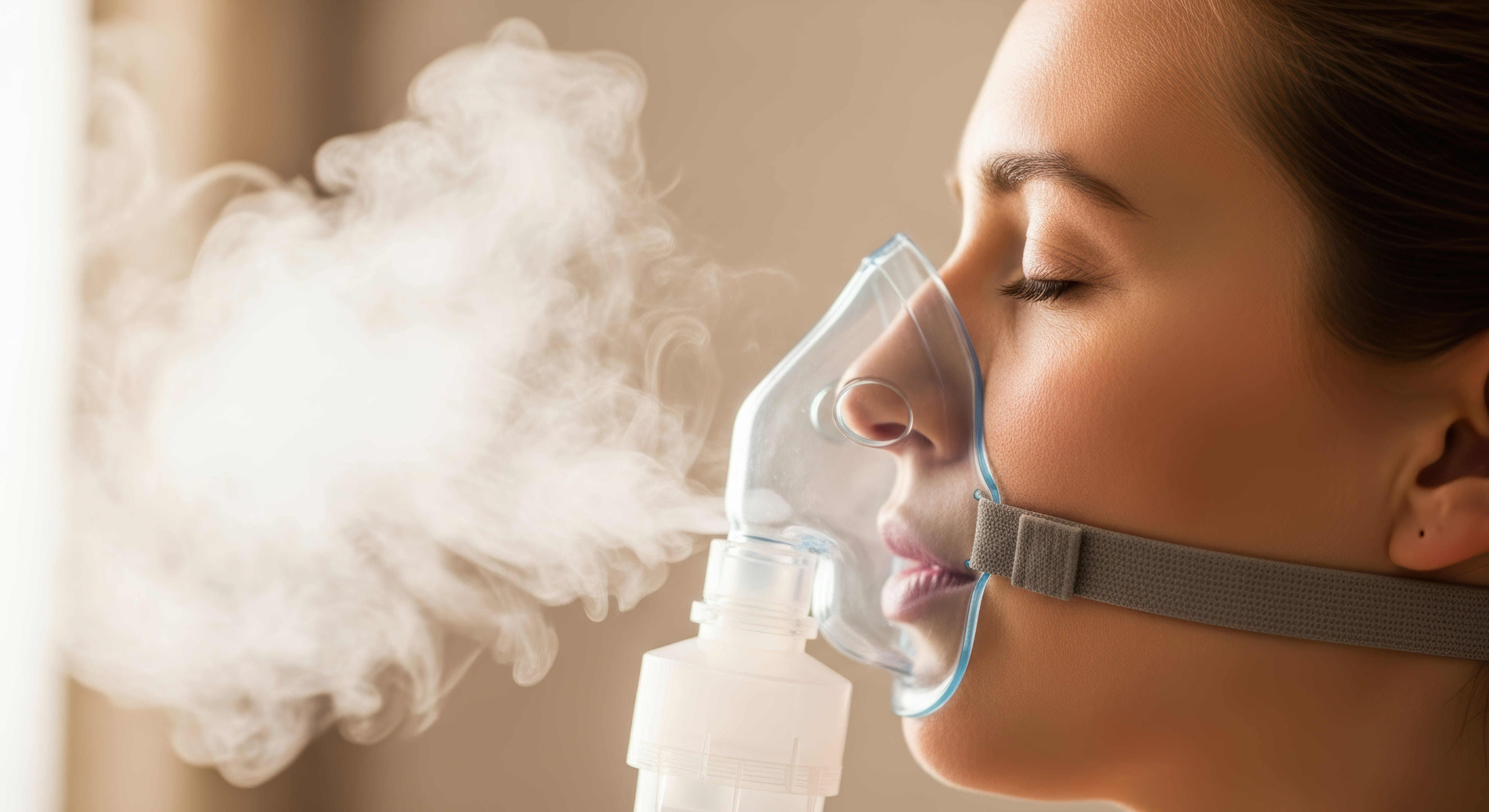
A 44-year-old woman with known oropharyngeal cancer and pulmonary metastases presents with significant hemoptysis. Nebulized tranexamic acid (500 mg in 5 mL q 6 hours) is begun in the ED. Laryngoscopy and bronchoscopy are completed ~24 hours later, without identifying a definitive site of bleeding. Over subsequent days, she continues to receive nebulized TXA as her case is considered. Her hemoptysis stops.
Nebulized Tranexamic Acid for Hemoptysis
“Massive hemoptysis” has no straightforward definition (>500 mL in 24 hours, >100 mL per hour, etc); it’s best described as hemoptysis severe enough to make an experienced pulmonologist-intensivist worried enough to advocate for prompt intubation, bronchoscopy, and bronchial artery embolization.
Most patients’ hemoptysis is less severe. Nebulized tranexamic acid is being used more often to treat nonmassive hemoptysis, based on a handful of randomized trials.
How well supported is the practice?
1. Wand et al (Chest 2018)
At one center in Tel Aviv, Israel, 25 patients with nonmassive hemoptysis (about 40% with lung cancer) who were randomized to nebulized TXA (500 mg q 8 hours) had fantastic results compared to 22 patients randomized to inhale saline placebo.
96% had resolution of hemoptysis by day 5, vs 50% inhaling saline;
They had significantly reduced volume of expectorated blood (measured after day 2);
The TXA patients had shorter lengths of stay (5.7 days vs. 7.8).
Remarkably, no patients inhaling TXA required interventional bronchoscopy or embolization (0% vs. 18% in the placebo arm).
They also had a lower recurrence rate at one year.
There were no adverse events noted.
The design is described as double-blind (vials prepared by the central pharmacy).
The benefits in the nebulized TXA arm were indeed impressive.
But there are yellow flags, common in single-center trials:
The investigators added an outcome (volume of blood) after registering on clinicaltrials.gov, where they originally registered only “bleeding stops” at “one year” as the outcome.
They don’t describe how they concealed randomization, or who adjudicated outcomes.
They planned to enroll 100 patients (per clinicaltrials.gov), but stopped early “after the successful recruitment of 47 patients when the perceived superiority of the TA therapy was noted”, without prespecifying interim stopping criteria. This greatly increases the likelihood of a false positive and raises concerns about the integrity of the methods generally.
2. Gopinath et al (Chest 2023)
At one center in New Delhi, India, 110 patients with nonmassive hemoptysis were randomized to open-label nebulized TXA (500 mg t.i.d.) or IV TXA (500 mg t.i.d.)
Those randomized to nebulized TXA had higher rates of cessation of hemoptysis at 30 minutes (n=40 vs. 28), and smaller amounts of hemoptysis at all time periods studied. Nebulized TXA patients also fewer embolization procedures (13 vs 21).
However, the study was unblinded. It’s hard to put faith in outcome assessments when the assessors knew the treatment assignments.
Notably, 67% of patients receiving inhaled TXA were then discharged home from the ED, highlighting the difference in care systems between India and the U.S. (although it’s debatable whether almost any patient presenting to the ED with hemoptysis should be admitted to the hospital, as is the case in the U.S.).
3. Agrawal et al (Indian Journal of Pharmacology 2025)
At a single center (PGIMER) in India, 56 patients with nonmassive hemoptysis were randomized to nebulized TXA or placebo. About half the patients had tuberculosis; only two had malignancy.
The frequency and volume of hemoptysis declined in the TXA arm, which was significant at day 1 but not at day 2.
More patients receiving TXA had resolution of hemoptysis (63% vs 24%).
Performed at a top academic research and tertiary center in India, this study described relatively rigorous methods with a low risk of bias (e.g. blinding of treating physicians and outcome assessment, automated randomization with allocation concealment by a pharmacist).
However, they used the Wand et al Tel Aviv study for their power calculations, and assumed there would be an 80% response rate and a 40% difference between groups, which conveniently reduced the sample size to only 44.
When their own results were less impressive (but more believable), they lost statistical significance.
The Takeaway: So What, and Why Not?
You might respond, who really cares that the studies weren’t great? Nebulized TXA was described as safe and well-tolerated in all three trials. Mucosal irritation or mild reversible bronchospasm were the prominent adverse events. Inhaled TXA might help mitigate a life-threatening situation for some patients, and prevent intubation or the need for invasive procedures with their attendant risks.
So why not use it in every patient with significant hemoptysis?
These trials fall far short of providing good reason to do so—but there doesn’t seem to be any good reason not to, either.
Small Studies Can Change Global Practice
That pragmatic take on the less-than-convincing data illustrates just how easy it can be to change the practice of critical care worldwide.
Based on the methodologically weak 2018 Wand et al study, inhaled TXA was incorporated into widely used online repositories of recommendations. (The most commonly described regimen has been 500 mg in 5 mL by nebulizer three to four times daily.)
The two trials since have been either crucially flawed (unblinded) or woefully underpowered (n=47).
That said, it’s not like we’re trying something without precedent (nebulized vitamin C?). Tranexamic acid has a long-established role as a hemostatic agent; it makes good sense to use it as a nebulized topical therapy for hemoptysis.
But when we do, it’s also good sense to marvel at just how easily influenced we can sometimes be.
References
Inhaled Tranexamic Acid for Hemoptysis Treatment: A Randomized Controlled Trial. Wand O, Guber E, Guber A, et al. Chest. 2018;154(6):1379-1384. doi:10.1016/j.chest.2018.09.026.
Nebulized Vs IV Tranexamic Acid for Hemoptysis: A Pilot Randomized Controlled Trial. Gopinath B, Mishra PR, Aggarwal P, et al. Chest. 2023;163(5):1176-1184. doi:10.1016/j.chest.2022.11.021.
Efficacy and Safety of Tranexamic Acid Nebulization to Control Bleeding of Hemoptysis: The TXA-NEB Randomized Controlled Clinical Trial. Agrawal A, Dhibar DP, Prakash A, et al. Indian Journal of Pharmacology. 2025;57(6):392-400. doi:10.4103/ijp.ijp_824_25.
Effectiveness of Inhalational Tranexamic Acid in Patients With Nonmassive Hemoptysis-a Systematic Review and Meta-Analysis. Mahalingam S, Rajendran G, Ramkumar A, et al. Lung. 2025;203(1):19. doi:10.1007/s00408-024-00774-3.
Nebulized Tranexamic Acid in the Management of Hemoptysis: An Integrative Review. Ye M, Chen M, Wang C, et al. Lung. 2025;203(1):28. doi:10.1007/s00408-024-00780-5.
Antifibrinolytic Therapy to Reduce Haemoptysis From Any Cause. Prutsky G, Domecq JP, Salazar CA, Accinelli R. The Cochrane Database of Systematic Reviews. 2016;11:CD008711. doi:10.1002/14651858.CD008711.pub3.
Just an example of how "medicine" and "science" coexist but will never be synonymous.