New Guideline: Get full-body CT scans for post-cardiac arrest patients
Fishing often catches fish, a major society concludes
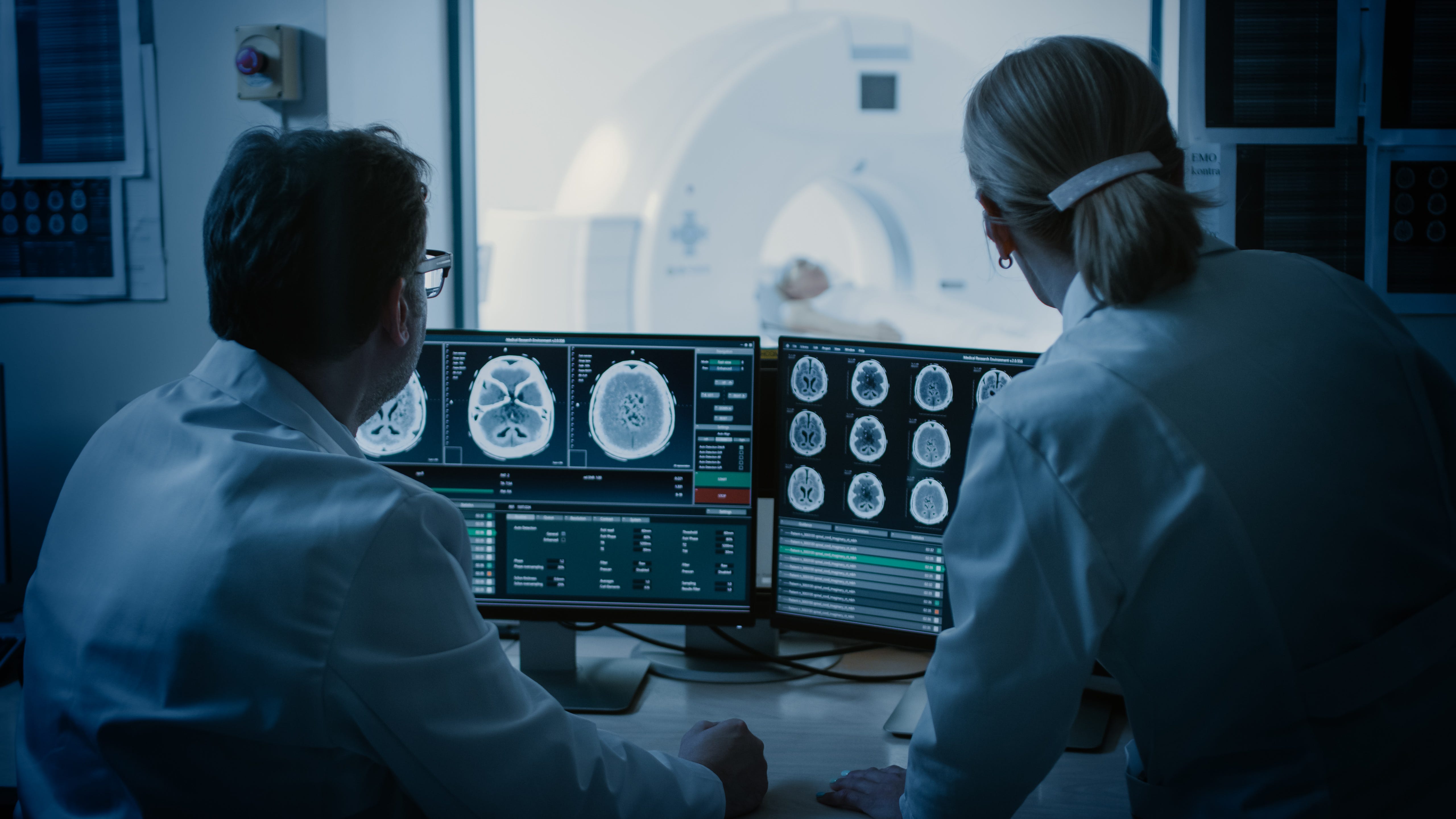
In its 2025 update to its post-cardiac arrest management guidelines, the American Heart Association now suggests that full-body CT scans may be appropriate for most patients after cardiac arrest.
“Full body CT scan (ie, head to pelvis) can diagnose pathologies contributing to cardiac arrest, including but not limited to intracerebral hemorrhage, pulmonary embolism, cardiac tamponade, aortic dissection, and pneumothorax.
CT imaging can also identify complications of cardiac arrest or resuscitation, such as fractures, aspiration, pulmonary contusions, pneumothorax, and hemorrhage[.]”
The new guidance is based on a review of 17 small observational studies, 10 of which examined the utility of CT after out-of-hospital cardiac arrest. In those studies, an important new finding was discovered in between 8% and 54% of patients undergoing head, abdominal, and/or chest CT.
For example, in the prospective CT-FIRST study (n=104) in 2023, head-to-pelvis CT identified 92% of causes of arrest (vs. 75% with standard care) and significantly reduced (by hours) the time to diagnosis of critical problems.
Among 104 patients with OHCA treated at the University of Washington through 2018, rapid head-to-pelvis CT after stabilization identified a cause for arrest in 39% of patients, and one-third of these (n=13, or 13% of all patients) were considered to have been “catches” that would not have been identified by usual care without a potentially life-threatening delay:
“… acute coronary syndrome (n = 1), pulmonary embolism (n = 5), pneumonia (n = 1), hemorrhagic cerebrovascular accident (n = 2), necrotizing mediastinal mass (n = 1), and abdominal catastrophe (n = 3).”
And at a French center, data published in 2012 found that among 355 patients undergoing CT after cardiac arrest over 10 years, CT scanning made a diagnosis in 72 patients (20%), including stroke (n=38) and pulmonary embolism (n=19).
In other studies, CPR-related traumatic complications like liver and splenic lacerations, pneumothoraces, and rib fractures were noted on CT scans, adding additional potential benefit to the obtained imaging.
AHA noted that based on a convergence of the small studies, head-to-pelvis CT might provide a new or expedited diagnosis in approximately 30% of patients.
No study was adequately designed to test or demonstrate a survival benefit from early CT scanning.
Risks of IV Contrast and Transport
Identifying vascular conditions like pulmonary embolism requires intravenous contrast, and patients after cardiac arrest are highly susceptible to acute kidney injury.
In the CT-FIRST cohort, AKI occurred in about 25% of patients in each group (CT-scanned and usual care).
In the UW cohort, AKI occurred in 28% of patients undergoing post-arrest CT, but only one required the initiation of dialysis. There was no control group for comparison.
For patients with tenuous stability, the risks of transport to and from CT must be weighed against the potential benefits of the scan, the AHA advises. However, when we don’t know the etiology of the arrest, weighing those two unknowns is yet another unknown. After all, aren’t the most unstable patients the ones most likely to benefit from an immediate intervention based on a new CT finding?
One CT Can’t Rule Them All
Contrast boluses are timed differently for optimal diagnostic imaging of vascular conditions like pulmonary embolism, aortic dissection, cerebral large vessel occlusion, and mesenteric ischemia.
There’s no simple way to harmonize a single contrast bolus, creating trade-offs between the theoretical increased nephropathy risk from larger contrast doses, or accepting suboptimal imaging for certain conditions. The AHA guidance doesn’t address this technical issue.
For example, in the U. of Washington cohort, the imaging protocol included a noncontrast CT head, an electrocardiogram-gated cardiac and thoracic CT angiogram, and a nongated venous-phase CT angiogram of the abdomen and pelvis.
Collaboration between radiology and critical care leadership, referencing the imaging strategies used in the literature, will likely be needed to navigate these trade-offs between diagnostic yield and (theoretical) nephropathy risk.
The “deliverable” should be a new orderable aliased as “post-cardiac arrest CT angiography” in the EMR.
CT Isn’t Mandatory, and Doesn’t Replace Thinking or Other Tests
This was a 2B recommendation, the weakest category, in which the benefits are considered marginal, based on moderate-quality evidence from nonrandomized studies.
Echocardiography or point-of-care ultrasound is also weakly recommended after cardiac arrest by AHA (another 2B suggestion but with an even lower evidence grade, as most studies did not include a reference standard).
Conclusion
Comatose patients surviving cardiac arrest are often the sickest of the sick. They can’t communicate or even respond on exam, and other information sources are often lacking. They’ve also just experienced a further traumatic event of chest compressions during CPR.
“Fishing expedition” is a semi-pejorative term given (usually by those trained in internal medicine) to exploratory whole-body imaging with no specific diagnosis in mind. But sometimes when you go fishing, you catch a fish (or several).
Given the acceptable rates of contrast nephropathy observed in the (very limited) observational data, and the panoply of serious-but-difficult-to-detect problems that can accompany cardiac arrest, it makes sense to consider head-to-pelvis CT scanning more often, especially when (anecdotally speaking) most are already undergoing noncontrast head CT.
However, the technical constraints from competing contrast requirements would seem to require either prioritization of diagnostic considerations (e.g., optimize for diagnosis of PE) or larger contrast boluses.
This feels like a change that should happen on a system level, excepting the devoted clinicians who don’t mind fielding a lot of phone calls from radiology “just making sure this is what you wanted to order.”
PulmCCM is not affiliated with the American Heart Association or any other specialty society.