

New Guideline on ICU Care for Older Adults
This probably seemed like a good idea at the time

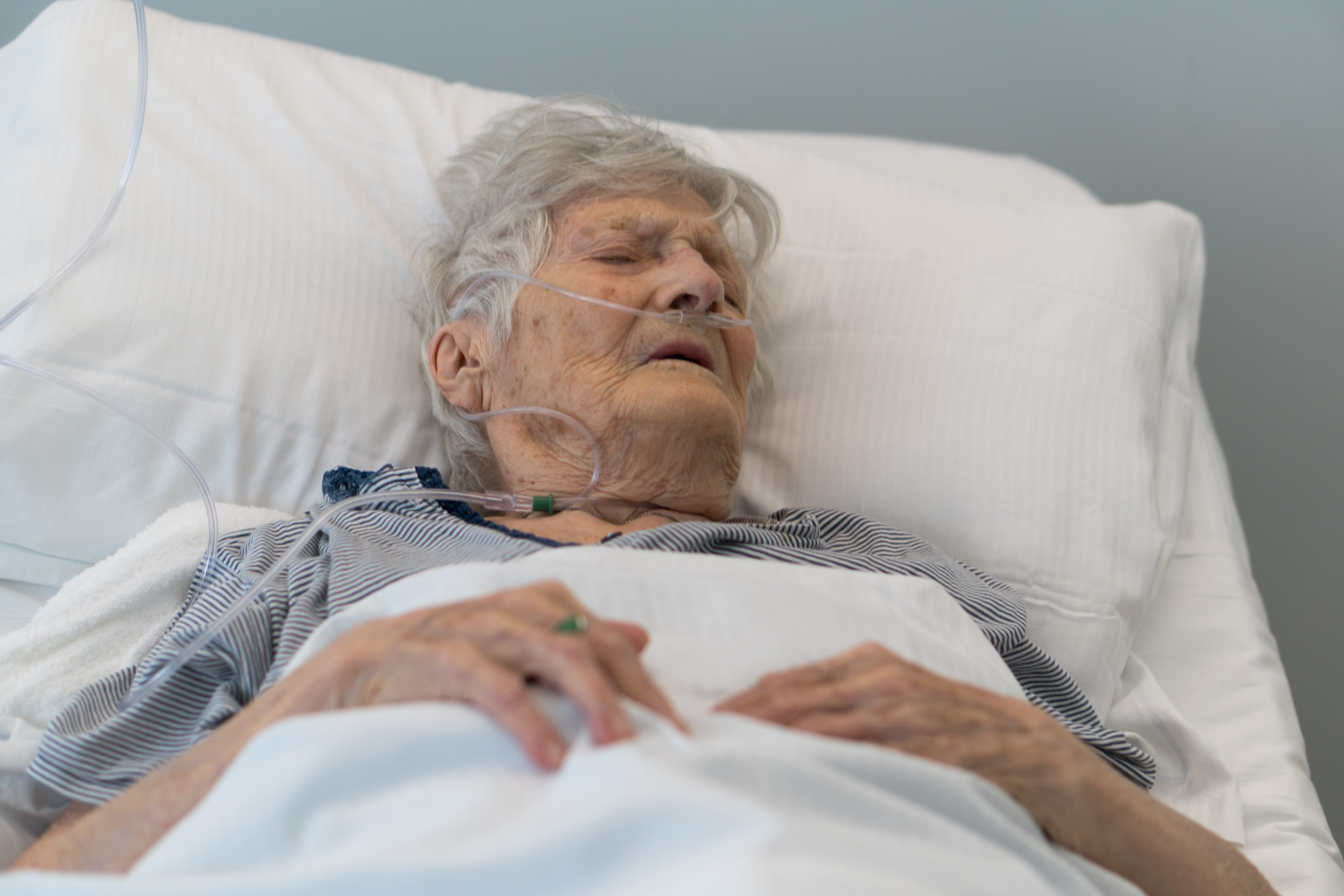
More than probably any other group of people on earth, intensivists are aware that as people get older, things fall apart. We see firsthand that on average, 85-year-olds are at greater risk for bad outcomes from critical illness than 45-year-olds. After seeing this pattern play out hundreds or thousands of times over years, it's understandable that clinicians unconsciously form heuristics.
But we also see that senescence happens to people at highly variable rates and patterns, mostly based on their behaviors and baseline health (which are closely linked to socioeconomic status).
This dispersion produces “young” octogenarians and “old” fortysomethings. A marathon-running, never-smoking 85-year-old may have a better chance of surviving critical illness or emergency surgery than a 45-year-old with cirrhosis and ESRD who drinks and smokes heavily daily.
Age-based heuristics tend to align with clinical reality, and the pattern-recognizing clinician-brain may be unable to fully resist the pressure to make a suite of assumptions about an older patient, especially one who cannot communicate.
However, robust elderly patients are no longer a rarity, becoming far more common in more affluent communities especially. Any ageist bias lingering from training or experience poses a risk to the healthiest elderly.
But also, let’s be honest, how many 85-year-olds are running marathons?
Chronological Age and Frailty (“Biological Age”)
ICU mortality increases with increasing age—almost tautologically—because older people usually have more medical problems and frailty. Mortality after ICU discharge is also associated with age, which is also tautological: older people have a shorter life expectancy.
Reviews that attempt to control for comorbidities and frailty, however, have found an inconsistent association between age and mortality in the ICU. That seems to be because enough healthier older people do better, thanks to their younger “biological age,” to weaken the association.
Frailty also correlates well with ICU mortality, about as strongly as chronological age, but also not well enough to use as an accurate predictor of outcome.
Experienced clinicians incorporate considerations of age, chronic disease burden, acute disease severity, and frailty or disability in forming a gestalt prognostic assessment of each individual patient.
And to date, there has been no model shown to perform better in predicting outcomes in individual patients after ICU admission.
But even well-tuned clinician gestalt is very frequently inaccurate, especially among trainees, nurses, and younger physicians.
All that is to say that any heuristic that is predominantly based on age (or any other single variable) will too often be wrong, and could easily result in under- or overtreatment.
We’ve all gotten very used to regular overtreatment in the ICU. But those ethical challenges aside, undertreatment—not providing lifesaving testing and interventions to a patient incorrectly believed to be moribund based on age—should worry us more.
A Geriatrician in Every ICU?
A major critical care society released their “Guidelines on Caring for Older Adults in the ICU.”
Wisely, and cautiously, they avoided any direct mention of the possibility of overtreatment (harm) or undertreatment (rationing, ageism) of the elderly in ICUs.
Instead, the panel recommended a “geriatric model of care” for all older adults admitted to the ICU. By this they meant a geriatric consult—for every patient aged 65 or older in the ICU.
They acknowledged that the evidence they cite does not support this suggestion. But beyond that, it’s mathematically impossible.
There are about 6,400 practicing geriatricians in the U.S. They are all already working in other settings—clinics and hospital wards, mostly.
Adults aged 65 and older account for about half of the 5 million ICU admissions annually, or ~2.5 million. That’s about 350 ICU consults per geriatrician per year, about 30 per doc per month. Seeing each patient twice more in the unit would be 90 encounters per geriatrician per month.
Implementing this guideline would immediately require a quarter to half the geriatrician workforce working full-time in ICUs (or all of them working 25% in the unit), or training 3,000 more geriatricians. That would cost about $1 billion per year.
And since there’s no geriatrician coming, guess who is supposed to be the geriatrician in this “model of care”?
ICU Care is Already Geriatric Care
The panel knew all this. And since 65-and-older patients already comprise half the ICU, and probably 75% of its sickest patients, encouraging us to consider them as a separate group is an odd suggestion.
So what is the panel getting at?
They explicitly declined to say:
The panel was intentionally ambiguous regarding the specific geriatric models of care to be implemented as part of this recommendation and acknowledged interventions may vary depending on hospital, resources, and expertise available. At a minimum, the included studies intentionally incorporated geriatric principles into the care of older adults, such as removal of unnecessary tethering devices (urine catheters and restraints), addressing hearing impairment, and a focus on functional and cognitive outcomes through occupational therapy.
But we should be removing restraints and urinary catheters as soon as possible in all patients, regardless of age.
The only other recommendation they made (other than the impossible-geriatric-consult) was not to give antipsychotics to prevent delirium in the elderly.
Antipsychotics already have a black-box warning against doing this, although it certainly doesn’t hurt to re-emphasize it.
It feels like there was a sense somewhere in the organization that there should be a guideline for older adults, but then it turned out there was nothing much to say in it.
And that’s fine.
So, Just Carry On, Then
Older adults comprise half of ICU patients, and a majority of the sickest, frailest, or both. A minority, meanwhile, were vigorous and robust until the onset of their acute illness.
The clinician’s job is to learn who is which, and treat each according to her individual situation and needs.
A 75-year-old marathon runner may get an open aortic aneurysm repair and CRRT.
The 75-year-old cachectic, contracted, and catatonic nursing home resident with end-stage dementia may get most of his meds discontinued and a palliative care consult.
As long as each patient’s plan is devised thoughtfully and compassionately with consideration of their personhood, that’s not ageism. It’s good medicine.
Reference
Ferrante LE, Chaudhuri D, Laiya Carayannopoulos K, Jain S, Tate JA, Álvarez-Espinoza E, Austin CA, Burry L, Devinney MJ, Ehlenbach WJ, Happ MB, Hope AA, Hua M, Kho ME, Palakshappa JA, Scheunemann LP, Sinvani L, Stahl B, Wang S, Wunsch H, Rochwerg B, Brummel NE. Society of Critical Care Medicine Guidelines on Caring for Older Adults in the ICU. Crit Care Med. 2026 May 1;54(5):1060-1072. doi: 10.1097/CCM.0000000000007085. Epub 2026 Mar 20. PMID: 41860322.
The de facto use of the ICU as an essential purgatory in the transition to death amongst octa- and nonagenarians is, perhaps, the most wasteful of obligated costs in contemporary healthcare.
While answers to appropriate access and justice don't yet exist, it is crucial that we prioritize a public discourse of what that pathway to access and justice should deliberate, and how it should be implemented in the course of publicly subsidized healthcare.
Getting a geriatrician in the ICU would be equal to getting a dermatologist to consult on an inpatient.