

Pulse oximeters did not overstate oxygenation in any ethnicity (EquiOx study)
The largest prospective study in critically ill adults yields surprising results

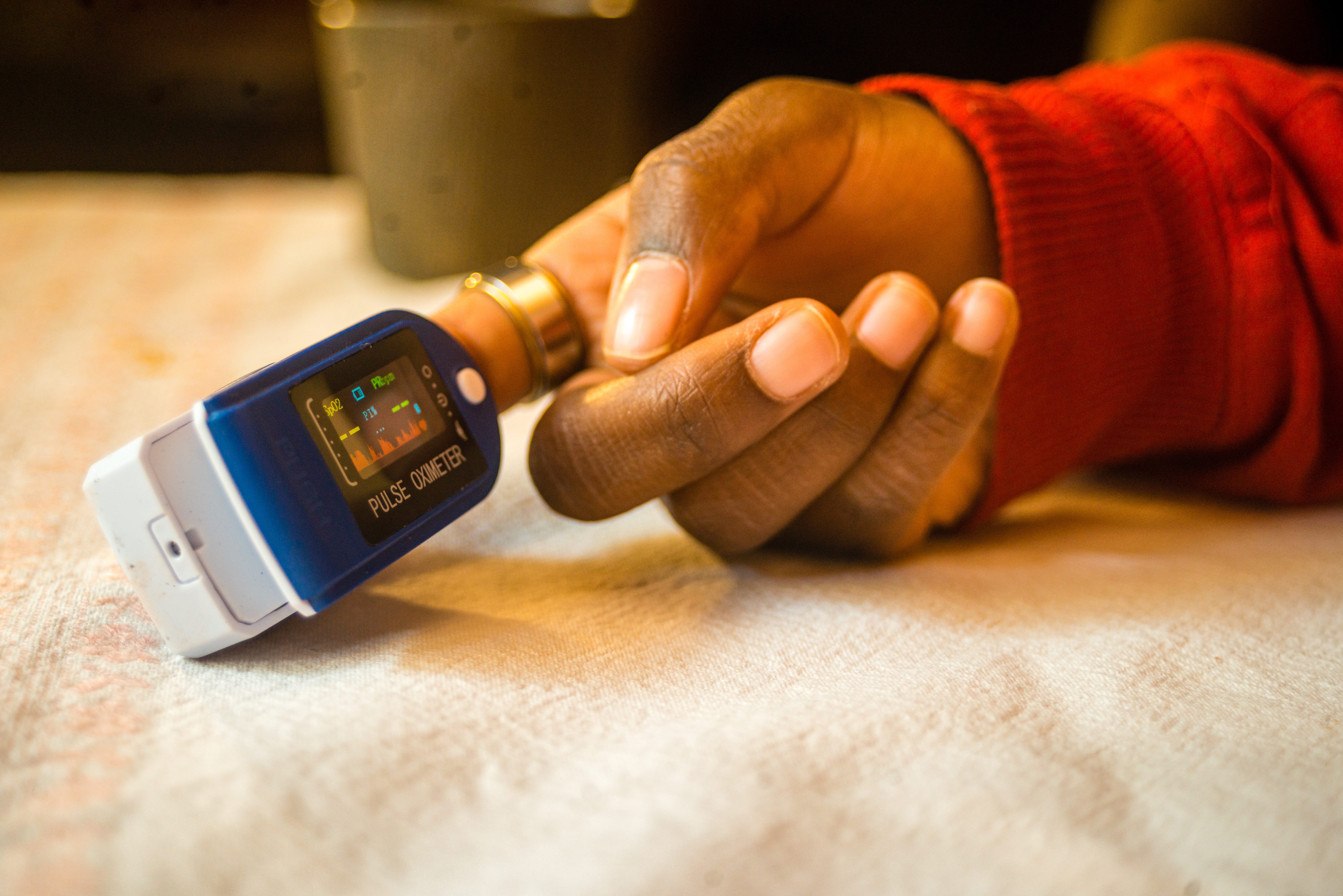
In 2020 during the Covid pandemic, researchers at the University of Michigan reported in a letter to the New England Journal of Medicine that in 12% of patients with darker skin pigment, pulse oximeters overestimated their oxygen saturation, reading 92 to 96% when arterial blood gases confirmed the true value to be less than 88%. (A similar degree of overestimation occurred in 3.6% of patients with light skin.)
A follow-up paper raised the concern that erroneous pulse oximetry may have led to undertreatment for Covid with increased readmission rates in people with darker skin, and a subsequent paper suggested an increased risk for organ failure or death in patients with unrecognized severe hypoxemia due to false readings.
Pulse oximeters overestimate O2 saturations in darker-skin patients; FDA acts (kind of)

Pulse oximeters for healthcare and consumer use are calibrated on patients with lighter skin. Manufacturers have recognized the devices’ suboptimal performance in darker-skinned patients for decades, but they have faced no serious regulatory or legal pressure to act.
Four years later, in January 2025, the FDA released specific guidance to manufacturers of pulse oximeters, encouraging more rigorous testing standards for patients with dark skin. The suggestions are not legally binding, but could create reputational risk or civil liability for manufacturers who do not comply.
Numerous other small studies have suggested pulse oximetry is less accurate in darker-pigmented patients. However, almost all such studies have been retrospective, based on chart review, with identifiable methodological weaknesses and risk for unmeasured biases.
So the FDA also funded a prospective study at UCSF, whose Hypoxia Lab has produced influential research on pulse oximetry and skin pigmentation over decades. They have a raft of publications categorized on their website under “Pulse Ox and Equity,” so the name came easily.
The EquiOx Study
At a single center affiliated with UCSF, 631 critically ill adults admitted to the ICU had 1,760 simultaneous paired pulse oximetry and arterial blood gas measurements.
Most were mechanically ventilated, and more than half were on vasopressors. However, hypoxemia rarely occurred; patients had to have relatively stable oxygenation at enrollment. Only one brand of oximeter was used, with either finger or ear probes (analyzed separately).
About half had medium-pigmented skin tones, while only 14% (n=87) had dark-pigmented skin tones; the other third had light-toned skin.
Pulse oximeter bias was measured against the ABG (SpO2 - SaO2).
Average root mean squared error (ARMS) was calculated as the square root of the average of the squared difference between SpO2 and SaO2.
Combining these methods (mean bias + ARMS) captures systematic bias (in either direction) along with scatter/noise. Learn more about ARMS here.
The findings were surprising.
Pulse oximeters systematically UNDERESTIMATED oxygen saturation in all skin tones.
The hypothesized risk from pulse oximetry error stems from the potential overestimation of oxygenation (false reassurance), when the oximeter says (e.g.) 91% but the true SaO2 is 87%.
The EquiOx study found the reverse situation was true—including for people with darker pigmented skin—with pulse oximetery consistently (but not always) underestimating oxygenation compared to the gold standard of ABG.
Overall, the mean bias for pulse oximetry was -1.70% relative to SaO2 on ABG.
Pulse oximetry underestimated SaO2 to a greater degree in lighter-pigmented patients (whose mean bias was -2%) than in darker-pigmented patients (mean bias -1.3%).
Patients who were classified as “White” had a -2.4% bias, while those classified as “Black” had a -1.5% bias.
Pulse oximetry overestimated oxygenation 20% of the time — but “occult hypoxemia” was almost nil.
“Occult hypoxemia” (pulse oximetry 92-96% while SaO2 on ABG was <88%) occurred in only two patients, both of whom were wearing ear probes.
Darker-pigmented patients were more likely to have an overestimation of SpO2 on oximetry.
Among the 20% of overestimates, darker-pigmented people were overrepresented.
However, among all the overestimation episodes in patients of all skin tones, there were only eight isolated episodes (~0.4% of the total observed) in which SpO2 was >90% and SaO2 was <90%.
Pulse oximeters underperformed federally-advised thresholds.
The FDA has recommended a <3% average root mean square for pulse oximetry accuracy. Overall ARMS in EquiOx was 3.9%. Although the direction (underestimation) was reassuring, pulse oximetry did not meet (non-binding) federal thresholds for accuracy, even in patients with relatively mild hypoxemia.
Why Do Pulse Oximeters Perform Differently In Darker Skin?
Pulse oximeters emit red and infrared light that passes through the fingertip (or another compressed tissue bed) to a sensor on the other side.
As the light passes through the tissue, some of it is absorbed by hemoglobin.
Deoxygenated and oxygenated hemoglobin absorb light at different wavelengths—660 nm (red) and 940 nm (infrared), respectively.
The algorithm in the pulse oximeter is tuned to recognize pulsating arterial blood as signal, and the non-pulsatile blood as background along with skin, etc. Using proprietary algorithms, the ratio of red and infrared light that make it through to hit the sensor during the pulsatile phase is indexed to an oxygen saturation value, which is displayed.
Like hemoglobin, the skin pigment melanin absorbs light across a broad spectrum of wavelengths, including red and infrared light.
The algorithms, tuned to patients with lighter skin, tend to process the “missing” light absorbed by melanin as having been absorbed by hemoglobin. This alters the ratio of red-to-infrared light arriving at the sensor. The algorithm calculates and reports a falsely high oxygen saturation.
Conclusions
Retrospective data has suggested that pulse oximeters consistently overestimate oxygen saturation in darker-pigmented people, and that this could result in deficiencies in their care.
In EquiOx, the largest prospective study to date, this wasn’t observed. Pulse oximeters systematically underestimated oxygenation in people of all skin tones.
However, the direction of relative error was consistent with prior studies: underestimation was of lesser magnitude in darker-pigmented people, who were also overrepresented in the instances of pulse oximeter overestimation of SaO2.
Although there were virtually no serious episodes of hypoxemia resulting from pulse oximetry inaccuracies, EquiOx did not enroll patients with significant hypoxemia (e.g., with ARDS), and only 14% of the patients had dark skin. The preprint has not yet undergone peer review.
Pulse oximetry’s accuracy in people with darker skin pigment who are experiencing significant or persistent hypoxia remains unclear. Evidence from laboratory studies suggests pulse oximeters become less accurate at lower SaO2s in this population, and a large body of retrospective data suggests the possibility for unrecognized hypoxemia in clinical settings.
Numerous studies testing pulse oximetry and the incidence of occult hypoxemia are ongoing in children, the largest of which is PACH, enrolling 650 children undergoing cardiac catheterization.
According to news reports, no studies are ongoing in critically ill adults.
Reference
Carolyn M. Hendrickson MD, Michael S. Lipnick MD, David Chen PhD, et al. EquiOx: A Prospective study of pulse oximeter bias and skin pigmentation in critically-ill adults. MedRxiv preprint. Accessed January 13, 2026.