

The Real-World Boards: Question #24
SECURE THE AIRWAY.

These are the Real-World Boards. As in the real world, there may be no single “right” answer, and you are only competing against yourself. Upgrade to the Lifelong Learner level for full access to all the questions and unlimited CME credits with an included Learner+ account.
A 63-year-old man arrived in your ICU eight days ago when he was intubated for acute hypoxemic respiratory failure attributed to severe pneumonia, attributed to recurrent aspiration from his known esophageal dysmotility and a history of strokes.
He improved and was extubated four days ago, but developed loud inspiratory stridor and high work of breathing and was reintubated within an hour. He had laryngeal edema on laryngoscopy, but his reintubation (using RSI) was not described as difficult. He received IV methylprednisolone 20 mg q12 for 3 days.
As he is undergoing a spontaneous breathing trial, he self-extubates and again develops loud inspiratory stridor and SpO2 of 85% on facemask oxygen. Noninvasive ventilation is applied with FiO2 100%, increasing his SpO2 to 94% after ten minutes. He reports difficulty breathing and begins to appear fidgety and agitated, but remains cooperative.

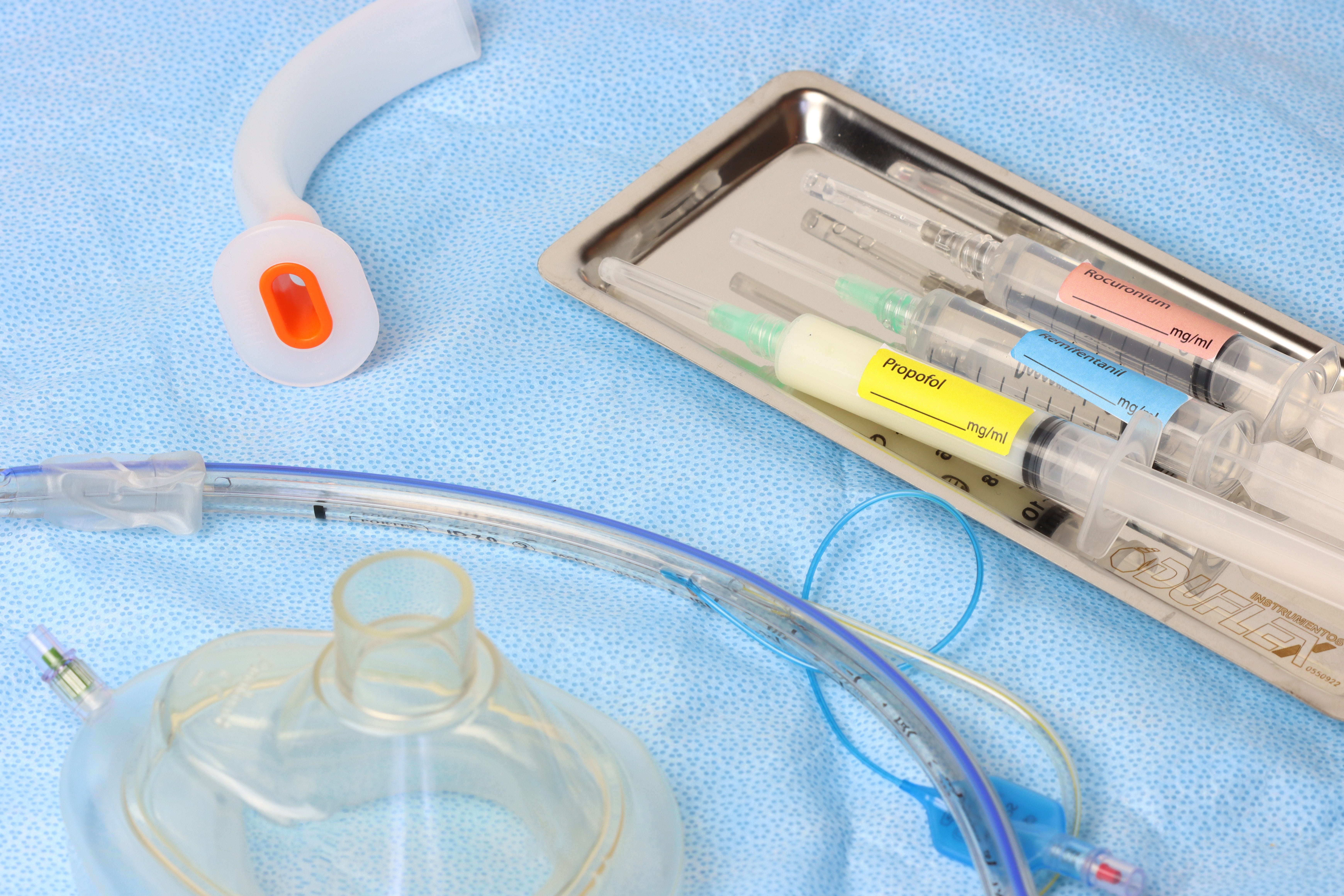
Rapid sequence intubation (RSI) is the care standard for most patients requiring mechanical ventilation, because it maximizes intubation conditions and first-pass success. By quickly rendering the patient both unconscious and nearly paralyzed, RSI tends to prevent aspiration (through neuromuscular blocking of retching), as well as hypoxemia and hemodynamic instability (from shorter total durations of apnea/hypopnea resulting from faster intubations).
However, some patients with expected difficult airways are considered to be at greater risk for serious complications from RSI. These include those with: