

The Real-World Boards: Question #9
A 58-year old man with bilateral infiltrates and hypoxemia needs respiratory support, but which kind?

These are the Real-World Boards. As in the real world, there is often no “right” answer, and you are only competing against yourself. Upgrade to the Lifelong Learner level for full access to all the questions and unlimited CME credits with an included Learner+ account.
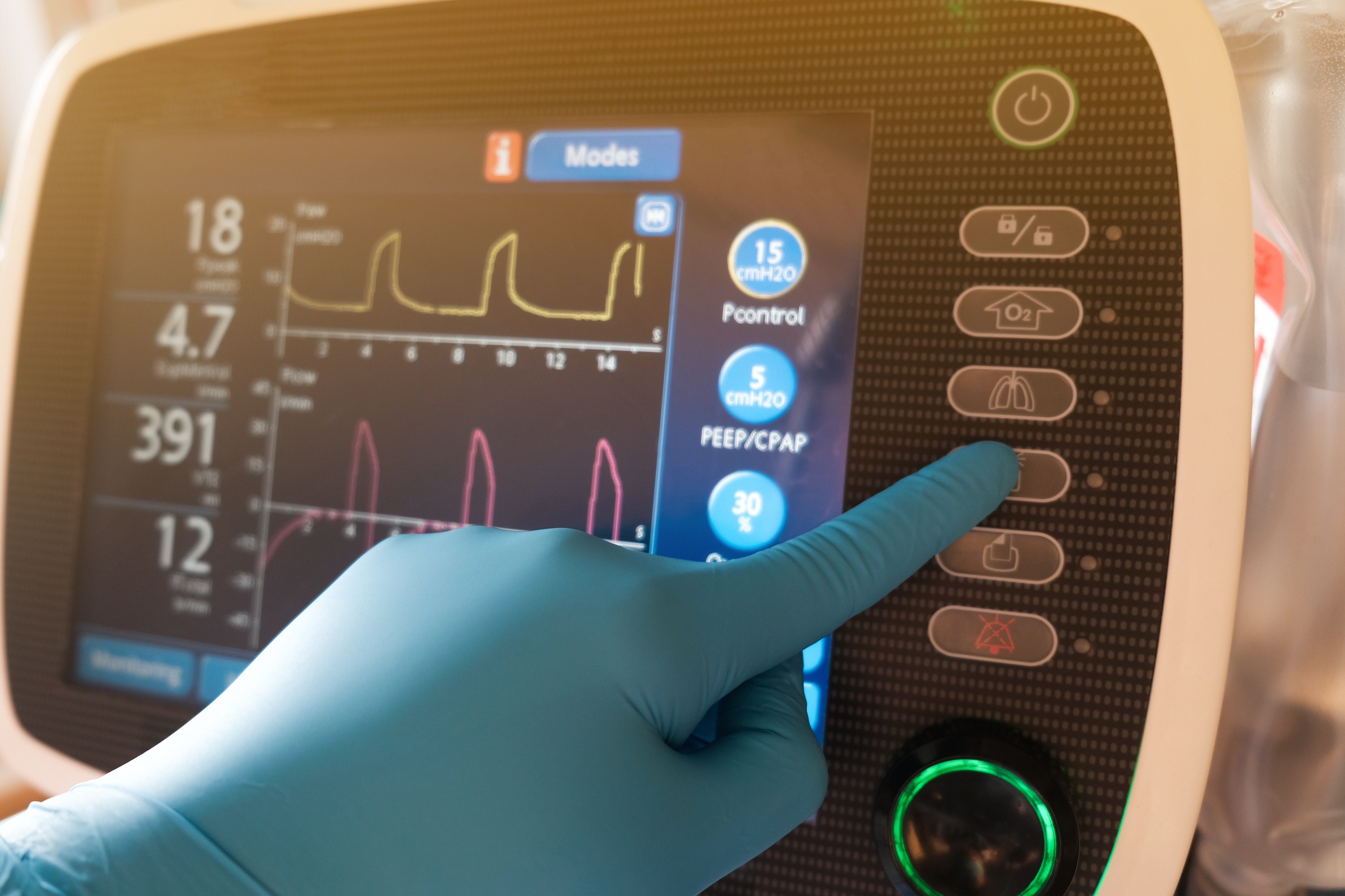
A 58-year-old man is admitted to the ICU through the ED after presenting with dyspnea, cough, and fever for several days. Chest film shows diffuse bilateral infiltrates. Stat echocardiogram is normal. His BMI is 28, and he recalls no past medical history.
He presented to the ED with SaO2 84% and required 5 L/min oxygen there. He is now receiving high-flow nasal cannula oxygen at 50L/min, FiO2 0.7, with pulse oximetry of 92%. His respirations are 28/minute with mildly elevated work of breathing. Arterial blood gas shows a PaO2 of 70 (low), pCO2 of 42 (normal), and pH 7.36 (normal). Blood pressure is 165/90, and heart rate is 108/min.
Appropriate testing, antimicrobial therapy, and intravenous steroids have been ordered.

You discuss with him the possibility that he may soon require a higher level of breathing support. He asks not to be put on a mechanical ventilator and asks if there is another good option.

The decision whether and when to intubate a patient with severe acute hypoxemic respiratory failure with diffuse bilateral infiltrates (a.k.a. acute respiratory distress syndrome) is complex and should always be individualized.
And it must be, because no randomized trials have tested an early invasive vs. noninvasive approach to respiratory support in ARDS.