

Guideline Update: Transfuse patients with acute MI to Hb ≥10 g/dL (AABB)
A third professional society agrees on risks of restricting transfusion in ACS

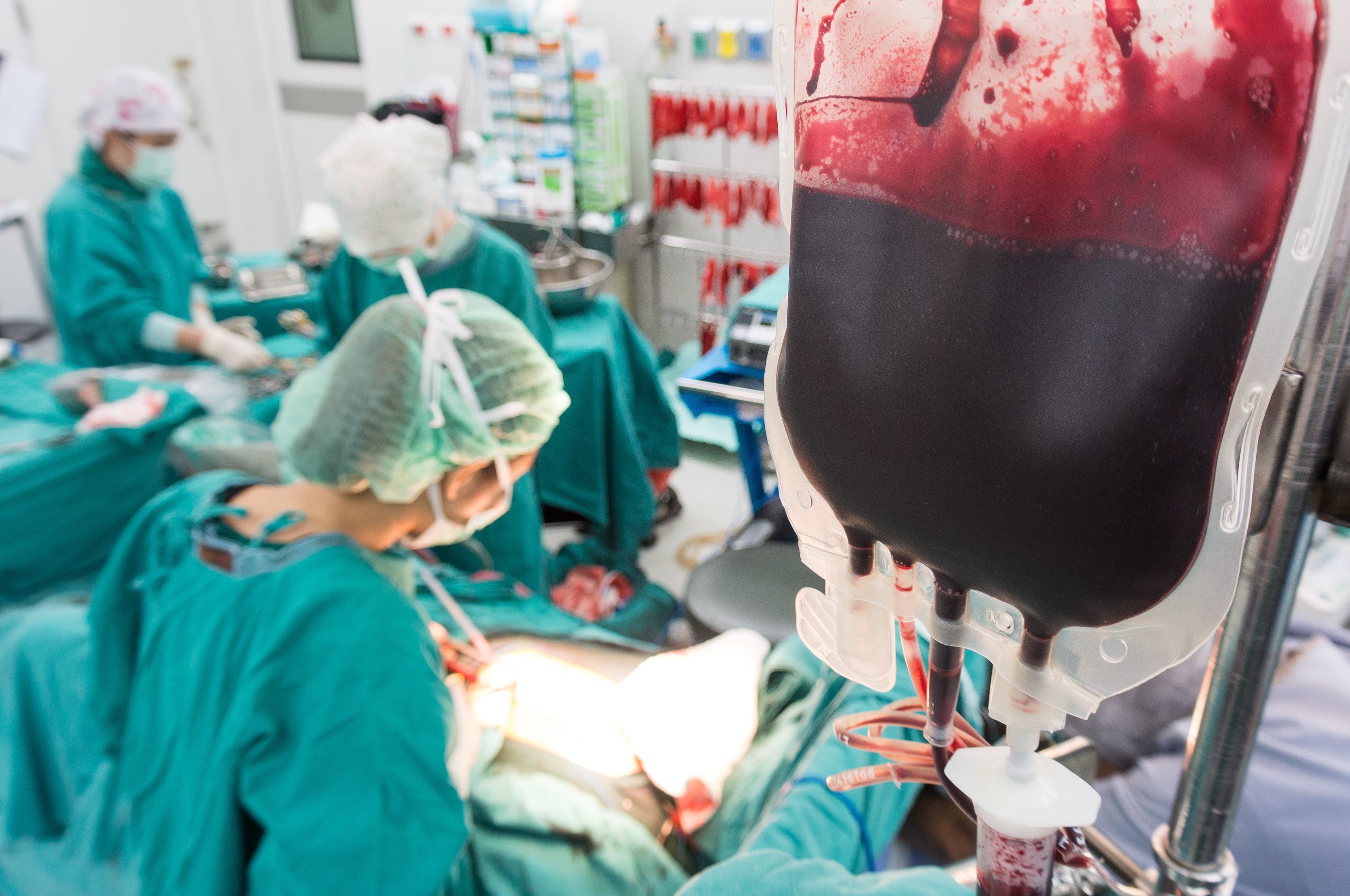
For more than 25 years, a restrictive strategy to red cell transfusion has been favored for the critically ill, after the TRICC trial demonstrated that limiting red blood cell transfusion to critically ill patients with hemoglobin <7 g/dL did not worsen outcomes (but did not improve them, either).

Patients with acute myocardial infarctions were excluded from the TRICC trial and most that followed. A few RCTs tested transfusion thresholds in patients with AMI, but were underpowered and inconclusive. The largest, REALITY, was a noninferiority trial that randomized 666 patients with MIs to hemoglobin targets of ≥8 or ≥10 g/dL, and found no difference in outcomes (with a numerically higher rate of MACE in the liberally transfused group, non-significant).
Then in 2023, the MINT trial (n=3,506) suggested that patients with acute MIs might be harmed by restricting transfusions.
In MINT, patients with MIs randomized to transfusion to a higher hemoglobin target of ≥10 g/dL exhibited nonsignificant trends toward better outcomes than those transfused to ≥8 g/dL:
Recurrent myocardial infarction or death, the composite primary outcome (~17% in restrictive, 14.5% in liberal)
Death (~10% in restrictive, ~8% in liberal)
Recurrent MI (8.5% in restrictive, ~7% in liberal)
Cardiac death (5.5% in restrictive, ~3% in liberal)
These confidence intervals generally included 1.0, but just barely, suggesting harm from restricting transfusion. A very rough estimate would be a number needed to harm of about 50 by restricting transfusion in acute MI, if the signal represents reality rather than chance.

Although MINT was far from conclusive, it led one U.S. critical care society to advise against restrictive transfusion, and the major European society to weakly recommend a target hemoglobin of 9 to 10 g/dL, citing low-certainty evidence.
In its 2024 guidance, the Association for the Advancement of Blood & Biotherapies (f.k.a. the American Association of Blood Banks) declined to endorse a target threshold for transfusion in acute MI.
In a 2025 update, they have done so.
The AABB panel noted the imprecision of MINT, but felt the potential benefits of higher transfusion thresholds for patients with MIs outweighed the potential risks of excess RBC transfusion.
The society tracker for recommended transfusion thresholds in acute MI is now:
AABB: transfuse to Hb ≥10 g/dL
European critical care society: transfuse to Hb ≥9-10 g/dL
U.S. critical care society: avoid restrictive transfusion; no specific target advised
Could Liberal Transfusion Be Harmful in Acute MI?
No studies have shown a measurable risk of harm from liberal transfusion in acute MI, but this does not eliminate the possibility of harm in individual patients.
In MINT, within 30 days of enrollment, the liberal transfusion arm received more than three times as much blood (~4300 units in total, an average of 2.5 units transfused per patient) as the restrictive patients (~1200 units, an average of 0.7 unit per patient).
Although this protocolized practice in MINT appeared safe, some clinicians will likely be wary of liberal transfusion in certain patients (e.g., those with cardiogenic shock, pulmonary edema, and/or volume overload, who are considered to be on the flat portion of the Frank-Starling curve).
“All transfusion decisions should incorporate the clinical context rather than solely the hemoglobin concentration,” the AABB authors were careful to add.
Sorta rather strange a negative trial sorta moved the data towards its actual intervention. But guess it was safe and in that subset of pts - anemic heart attacks perhaps they need that boost?
Outside that context we still waste a lot of blood - aiming even for 7 in a stable pt at 6.9 (or worse one who is stable and prognosis is dire). Or massive transfusion which is too broadly used in a Micu population it was never tested in.
But the commentary on the larger trials states a unique thing where: the “cons” of blood transfusions are not that high in the immediate? Like not much taco/trali in the intervention harm and potential benefit?
Thanks again.